
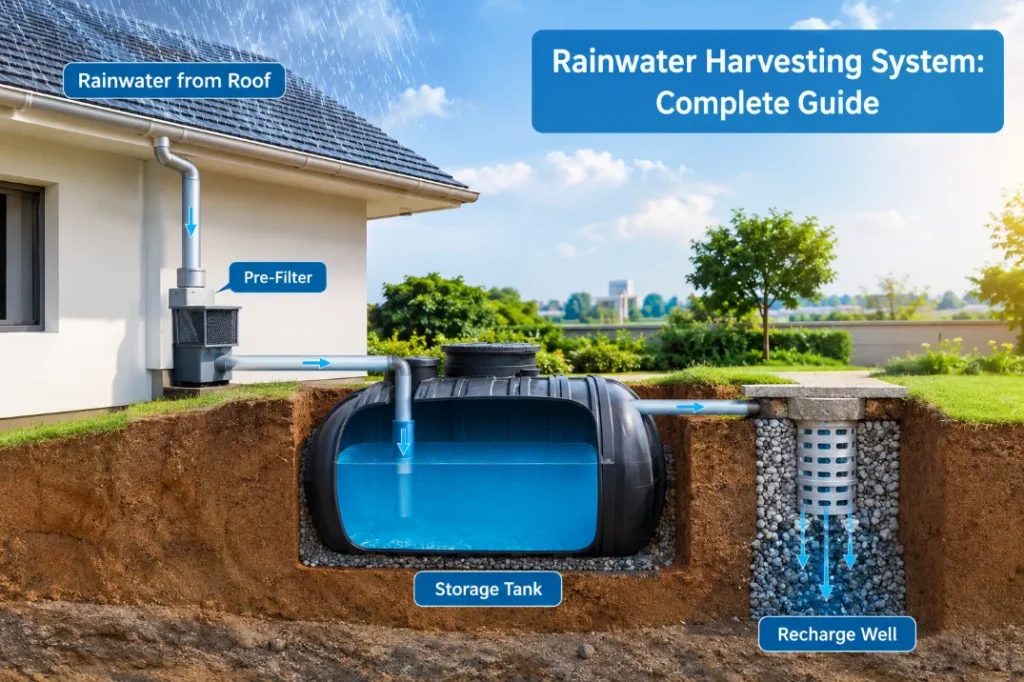
Rainwater Harvesting System: The Smart Solution for Water Conservation
Water scarcity is becoming one of India’s biggest challenges. Rapid urbanization, excessive groundwater extraction, irregular rainfall, and climate change have caused groundwater levels to decline significantly in many regions. A properly designed Rainwater Harvesting System (RWH) is one of the most effective ways to recharge groundwater, improve borewell performance, and ensure sustainable water availability.
At Vishal Borewell, we specialize in designing and constructing scientifically engineered rainwater harvesting systems for residential societies, industries, commercial buildings, institutions, agricultural farms, and government projects across Gujarat. With over 40 years of experience and 8,000+ successful borewell projects, we provide complete water management solutions, from hydrogeological surveys to recharge well construction and borewell drilling.
What is Rainwater Harvesting?
Rainwater harvesting is the process of collecting, filtering, and storing rainwater or directing it underground to replenish groundwater aquifers.
Instead of allowing rainwater to flow into drains and be wasted, a rainwater harvesting system captures it from rooftops or open surfaces and safely channels it into recharge structures.
The collected water can be:
Stored in tanks for domestic or industrial use
Used for irrigation
Recharged into groundwater aquifers
Used to restore dry borewells
Why is Rainwater Harvesting Important?
Every year, millions of liters of rainwater are lost as surface runoff. This not only wastes valuable freshwater but also contributes to flooding, soil erosion, and declining groundwater levels.
A well-designed rainwater harvesting system helps:
Recharge underground aquifers
Increase borewell water yield
Improve groundwater quality
Reduce dependence on municipal water
Lower water bills
Prevent flooding
Reduce soil erosion
Promote environmental sustainability
How Does a Rainwater Harvesting System Work?
A rainwater harvesting system follows a simple yet highly effective process:
Step 1 – Rainwater Collection
Rainwater is collected from:
Building rooftops
Industrial sheds
Warehouses
Parking areas
Open paved surfaces
Step 2 – Conveyance System
PVC pipes transport collected rainwater to the filtration unit.
Proper pipe sizing ensures smooth water flow without overflow.
Step 3 – First Flush System
The first rainfall usually contains dust, leaves, bird droppings, and debris.
A first-flush diverter removes this contaminated water before allowing cleaner rainwater into the filtration system.
Step 4 – Filtration
Rainwater passes through multiple layers such as:
Pebbles
Gravel
Coarse sand
Activated charcoal (optional)
Filter media
Stainless steel mesh
This removes suspended impurities before recharge.
Step 5 – Groundwater Recharge
Filtered rainwater enters:
Recharge well
Recharge pit
Recharge shaft
Existing borewell (through a scientifically designed recharge arrangement)
The water slowly percolates into underground aquifers, naturally replenishing groundwater.
What is Borewell Recharge?
Borewell recharge is the process of directing filtered rainwater into underground aquifers through a specially designed recharge structure connected to an existing or new borewell.
The objective is not simply to pour rainwater into the borewell. Instead, the water is carefully filtered and introduced into suitable geological formations so that the aquifer is replenished safely and efficiently.
A properly engineered recharge system can:
Increase groundwater storage
Improve borewell yield
Restore seasonal borewells
Reduce groundwater depletion
Extend borewell life
What is a Recharge Well?
A recharge well is a specially designed vertical structure that allows filtered rainwater to percolate into deep groundwater layers.
Unlike ordinary soak pits, recharge wells are designed based on:
Geological conditions
Soil type
Aquifer depth
Rainfall intensity
Water demand
Groundwater level
At Vishal Borewell, recharge wells are designed after conducting hydrogeological assessments to ensure optimal performance.
Types of Rainwater Harvesting Systems
1. Rooftop Rainwater Harvesting
Ideal for:
Homes
Apartments
Schools
Hospitals
Offices
Water is collected from rooftops and either stored or recharged into groundwater.
2. Surface Runoff Harvesting
Suitable for:
Industrial campuses
Commercial complexes
Large open areas
Rainwater from paved surfaces is collected and directed toward recharge structures.
3. Borewell Recharge System
Designed specifically for:
Existing borewells
Dry borewells
Low-yield borewells
This helps restore groundwater around the borewell.
4. Recharge Pit
Suitable where groundwater is relatively shallow.
Best for:
Residential buildings
Small plots
Villas
5. Recharge Shaft
Recommended where surface soil has poor permeability.
Commonly used in:
Industrial projects
Commercial buildings
Large campuses
Benefits of Rainwater Harvesting
1. Improves Borewell Water Availability
Recharging groundwater helps maintain water levels throughout the year.
2. Reduces Water Bills
Harvested rainwater decreases dependence on municipal or tanker water.
3. Environment Friendly
Rainwater harvesting supports sustainable groundwater management.
4. Prevents Urban Flooding
Capturing rainwater reduces stormwater runoff.
5. Increases Groundwater Levels
Continuous recharge improves underground aquifer storage.
6. Supports Agriculture
Farmers benefit from improved irrigation water availability.
7. Helps Industries Meet Water Requirements
Industries can secure long-term water resources while reducing operational risks.
Is Rainwater Harvesting Mandatory?
Many industrial, commercial, institutional, and large infrastructure projects are required to implement rainwater harvesting as part of groundwater management and environmental compliance.
Depending on the nature of the project and groundwater extraction, rainwater harvesting may also support regulatory approvals such as groundwater NOCs. Requirements vary by project type and applicable regulations.
Rainwater Harvesting System Installation Process
At Vishal Borewell, our installation process includes:
Site Inspection
We evaluate:
Roof area
Plot layout
Existing drainage
Soil conditions
Groundwater level
Existing borewell condition
Hydrogeological Assessment
Scientific analysis determines the most effective recharge method.
System Design
Our engineers prepare a customized design considering:
Catchment area
Rainfall data
Water demand
Recharge capacity
Soil characteristics
Construction
Work includes:
Excavation
Pipe installation
Filter chamber construction
Recharge pit or recharge well construction
Gravel packing
Testing
Commissioning
The system is inspected, tested, and commissioned to ensure proper operation.
Rainwater Harvesting System Cost
The cost depends on several factors, including:
Property size
Rooftop area
Annual rainfall
Soil type
Groundwater depth
Recharge structure type
Filtration requirements
Existing infrastructure
Project complexity
Because every site is different, Vishal Borewell recommends a site survey before preparing a detailed estimate.
Maintenance Tips
Regular maintenance ensures long-term performance.
Recommended maintenance includes:
Cleaning roof surfaces before the monsoon
Removing leaves and debris
Cleaning filters periodically
Inspecting pipelines
Servicing first-flush systems
Checking recharge structures annually
Common Mistakes to Avoid
Avoid these common issues:
Directly connecting dirty rainwater to a borewell
Installing inadequate filtration
Ignoring geological conditions
Poor drainage design
Using undersized pipes
Skipping routine maintenance
Professional design and installation help prevent contamination and improve system performance.
Why Choose Vishal Borewell?
With decades of expertise in groundwater solutions, Vishal Borewell offers comprehensive rainwater harvesting services backed by technical knowledge and field experience.
Our strengths include:
Over 40 years of industry experience
More than 8,000 completed borewell projects
Government-approved groundwater services
Scientific hydrogeological surveys
Recharge well and borewell recharge expertise
Borewell drilling up to 1,500 feet
Experienced technical team
High-quality materials and workmanship
End-to-end project execution
Services across Gujarat
Our Rainwater Harvesting Services
We provide complete solutions including:
Rainwater harvesting system design
Recharge well construction
Borewell recharge systems
Recharge pit construction
Recharge shaft construction
Rooftop rainwater harvesting
Groundwater recharge planning
Hydrogeological surveys
Borewell drilling
Borewell cleaning and development
Pump installation
Groundwater monitoring solutions
Assistance for industrial water management projects
Frequently Asked Questions (FAQ)
Does rainwater harvesting increase borewell water?
Yes. A properly designed recharge system helps replenish groundwater around the borewell, which can improve water availability over time depending on local geological conditions.
Can an existing borewell be recharged?
In many cases, yes. Existing borewells can often be integrated with scientifically designed recharge systems after evaluating their condition and the site’s hydrogeology.
Is rainwater harvesting suitable for homes?
Yes. Residential properties can benefit by reducing dependence on external water sources while supporting groundwater recharge.
How often should filters be cleaned?
Typically before the monsoon season and periodically during periods of heavy rainfall, depending on local conditions and debris levels.
How long does installation take?
Project timelines vary according to property size, design complexity, and site conditions. Small residential systems may be completed quickly, while large industrial projects require additional planning and construction time.
Conclusion
Rainwater harvesting is more than a water conservation practice—it is a long-term investment in water security, environmental protection, and sustainable groundwater management. Whether you own a home, industrial facility, commercial complex, educational institution, or agricultural property, a professionally designed system can improve groundwater recharge, support borewell performance, and reduce dependence on external water sources.
At Vishal Borewell, we combine engineering expertise, hydrogeological knowledge, and decades of field experience to deliver customized rainwater harvesting and groundwater recharge solutions across Gujarat.
If you are planning a new installation or want to recharge an existing borewell, our team can help you evaluate your site and recommend the most suitable solution.
Contact Vishal Borewell
Vishal Borewell Drilling Service
Services Offered:
Borewell Drilling
Rainwater Harvesting Systems
Borewell Recharge
Recharge Well Construction
Groundwater Survey
Hydrogeological Investigation
Piezometer Installation
Submersible Pump Installation
CGWA Consultancy
Phone: +91 8469877021
Email: contact@vishalborewell.com
Website: https://vishalborewell.com