
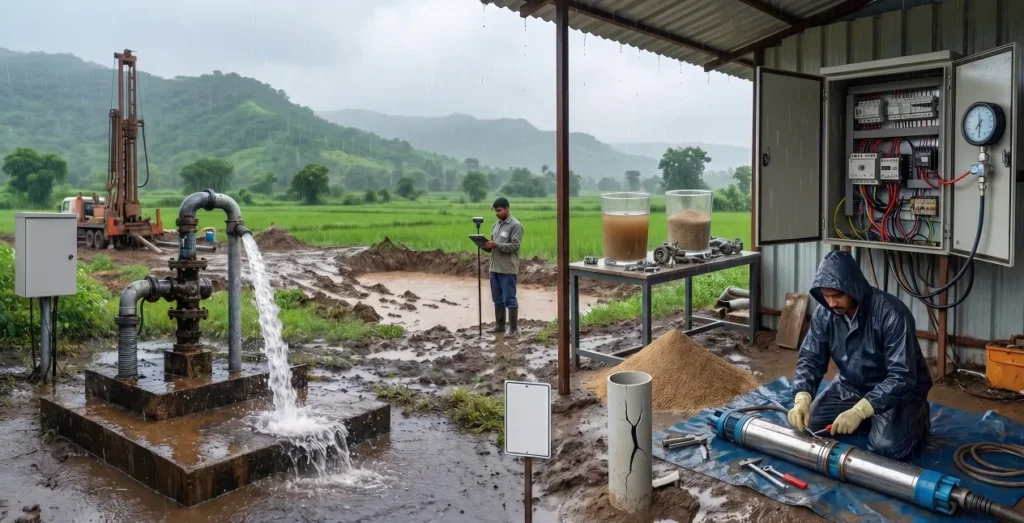
Keep Your Borewell Safe, Clean, and Productive During the Rainy Season
The monsoon season brings much-needed rainfall and helps recharge groundwater, but it can also create several problems for borewells if they are not properly maintained. Muddy water, pump failures, reduced water discharge, contamination, and electrical issues are common complaints during and after heavy rains.
At Vishal Borewell Drilling Service, we have over 40 years of experience and have successfully completed 8,000+ borewell projects across Gujarat. Our team provides professional borewell drilling, cleaning, flushing, pump installation, groundwater surveys, rainwater harvesting, and borewell rehabilitation services to residential, agricultural, commercial, and industrial clients.
This guide explains the most common borewell problems during the monsoon and the best solutions to protect your water source.
Why Does the Monsoon Affect Borewells?
Heavy rainfall allows groundwater to recharge naturally. However, excess rainwater can also carry mud, sand, bacteria, sewage, chemicals, and debris into poorly protected borewells.
Some common reasons include:
Improper borewell sealing
Damaged or old casing pipes
Floodwater entering the borewell
Poor drainage around the borewell
Lack of regular maintenance
Worn-out submersible pumps
Sediment accumulation inside the borewell
Proper maintenance before and after the monsoon helps ensure a safe and uninterrupted water supply.
1. Muddy or Dirty Borewell Water
Problem
One of the most common monsoon issues is muddy or brown-colored water. This happens when rainwater carries soil, silt, and fine particles into the borewell.
Possible Causes
Damaged PVC casing
Open borewell head
Floodwater entering the borewell
Sediment build-up
Solution by Vishal Borewell
Borewell flushing using high-pressure air compressors
Borewell cleaning and development
Inspection of casing pipes
Repair or replacement of damaged borewell components
2. Reduced Water Yield
Problem
Many people assume that heavy rainfall automatically increases borewell water levels. In reality, borewell discharge may reduce due to clogged fractures, sediment deposits, or aquifer conditions.
Solution
Our experts perform:
Borewell yield assessment
Borewell redevelopment
Air compressor flushing
Hydrogeological evaluation
Groundwater survey before recommending further drilling
3. Sand Particles in Borewell Water
Problem
If sand starts appearing in your water supply, it may indicate damage to the casing pipe or screen.
Risks
Pump damage
Reduced water quality
Frequent motor failures
Solution
Borewell inspection
Casing pipe repair or replacement
Borewell rehabilitation
Gravel packing where required
4. Borewell Pump Stops Working During the Monsoon
Problem
Heavy rains often affect electrical systems and submersible pumps.
Common Reasons
Water entering electrical joints
Damaged cables
Voltage fluctuations
Motor insulation failure
Our Solution
Submersible pump inspection
Cable replacement
Pump installation and maintenance
Electrical safety checks
5. Contaminated Borewell Water
Problem
Rainwater may carry bacteria, sewage, fertilizers, pesticides, and other contaminants into unprotected borewells.
Health Risks
Unsafe drinking water
Bad taste or smell
Waterborne diseases
Recommended Solution
Water quality testing
Borewell disinfection
Proper sealing of the borewell head
Installation of filtration systems if necessary
6. Borewell Flooding
Problem
Low-lying areas often experience flooding during heavy rainfall, allowing contaminated water to enter the borewell.
Prevention
Raise the borewell platform above ground level
Improve site drainage
Install a sealed borewell cap
Schedule annual inspections
7. Borewell Casing Damage
Problem
Old or damaged casing pipes allow soil and contaminated water to enter the borewell.
Solution
Vishal Borewell provides:
PVC casing installation
Borewell repair
Casing replacement
Structural inspection
8. Electrical Safety Issues
Problem
Rainwater and electrical systems are a dangerous combination.
Safety Tips
Keep control panels dry
Inspect wiring before operation
Avoid operating damaged equipment
Use qualified technicians for repairs
9. Low Water Pressure After Heavy Rain
Problem
Reduced pressure can result from sediment clogging, pump wear, or blocked pipelines.
Solution
Our technicians inspect:
Borewell condition
Pump performance
Delivery pipelines
Pressure systems
After inspection, we recommend the most cost-effective solution.
10. Lack of Preventive Maintenance
Problem
Many borewell failures occur because maintenance is ignored until a major issue develops.
Annual Maintenance Includes
Borewell inspection
Borewell flushing
Pump servicing
Electrical inspection
Water quality testing
Casing inspection
Yield assessment
Preventive maintenance increases the lifespan of both the borewell and the pumping system.
Monsoon Borewell Maintenance Checklist
Before and after the rainy season, ensure that you:
Inspect the borewell cap for proper sealing.
Check the surrounding drainage to prevent waterlogging.
Service the submersible pump and electrical connections.
Flush the borewell if water appears muddy.
Test water quality for drinking purposes.
Inspect PVC casing pipes for damage.
Remove debris around the borewell site.
Schedule a professional borewell inspection.
Why Choose Vishal Borewell Drilling Service?
For more than four decades, Vishal Borewell has been delivering reliable groundwater solutions throughout Gujarat.
Our Expertise
40+ Years of Industry Experience
8,000+ Successful Borewell Projects
Government & Industrial Project Experience
Borewell Drilling up to 1500 Feet
Borewell Cleaning & Rehabilitation
Rainwater Harvesting Solutions
Recharge Well Construction
Hydrogeological & Geophysical Surveys
Piezometer Installation
Digital Water Flow Meter Installation
CGWA NOC Consultancy
Professional Submersible Pump Installation
Our experienced team uses modern equipment and proven techniques to ensure long-lasting and efficient groundwater solutions.
Frequently Asked Questions (FAQs)
Why does my borewell water become muddy after rain?
Heavy rainfall can wash soil and sediment into an improperly sealed or damaged borewell, resulting in muddy water.
How often should a borewell be cleaned?
A professional inspection every year and cleaning whenever water quality or yield declines is recommended.
Can heavy rain damage a submersible pump?
Yes. Water ingress, electrical faults, voltage fluctuations, and cable damage during the monsoon can affect pump performance.
Is borewell water safe to drink after flooding?
No. Floodwater may introduce bacteria and harmful contaminants. Water quality testing and disinfection are recommended before use.
Can rainwater harvesting improve borewell performance?
Yes. Properly designed recharge wells and rainwater harvesting systems help replenish groundwater levels and improve long-term borewell sustainability.
Contact Vishal Borewell Today
If your borewell is experiencing muddy water, reduced discharge, pump issues, or contamination during the monsoon season, don’t wait for the problem to worsen.
Vishal Borewell Drilling Service offers expert inspection, borewell cleaning, flushing, rehabilitation, pump installation, rainwater harvesting, and groundwater consultancy services across Gujarat.
Contact our experienced team today for a professional assessment and reliable groundwater solutions.